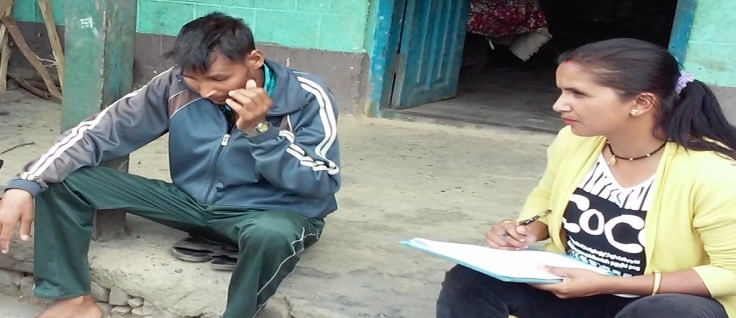
In my career, I have performed many laboratory tests for the diagnosis of the diseases. This is a usual part of my job. However, recently a patient’s condition compelled me to think how they suffer more due to lack of proper diagnosis of the disease.
Dil Bahadur, 20 years, a migrant worker from Dailekh district used to work as a cook in Indian state of Gujrat for last 7 years. He was enjoying his job and living well. Two years ago, he suddenly fell sick with symptoms of fever, convulsions & headache. He visited many hospitals in Gujrat for his diagnosis and treatment. He spent his hard earned money for his treatment but his condition did not improve. Eventually, he had to quit his job and had to return home to live with his family at Dailekh.
There was no improvement in his health condition, even after repeated medical checkups and treatments. He was rather suspected to be suffering from HIV by his family members and neighbors. He felt stigmatized by his neighbors and was compelled to migrate with his family to other place. Consequently, he moved to Birendranagar Municipality, ward no. 20, and lived in a rented room with his wife and children.
However, being the bread winner of the family and family members to take care of, he had no choice but to work in India again to support them. Despite his poor health condition, Dil Bahadur went to India again for employment in May 2015. Later that year in December 2015, he returned back to Nepal with severe ill health condition. His family took him to private and public hospitals where he was treated for nothing else than ‘gastritis’ and sent home with medicines. His health condition working as a migrant worker suggested for HIV infection and was also investigated for HIV infection. Though the HIV test results were negative, his poor health condition persisted.
As a neighbor I came to know about his condition from his wife. He was suffering from 'unknown' condition! I am very aware about Malaria infection, as it is among the very common diseases our migrant workers suffer from. I suspected of Malaria, TB and Kala-azar looking at the symptoms and history he presented. I motivated him to come to DPHO for the tests which he could get it done for free. Finally, in February 29, 2016 he was diagnosed with PV Malaria and treated as per the National malaria treatment protocol. After years of suffering, he is now cured from malaria. I heard that he went to India to work again, in a good health condition to support his family. (Translated version)

Jan 1
आकस्मिक बाढिको प्रतिकार्यका प्रमुख गतिविधिहरुको प्रतिवेदन
Read More
Jan 1
आकस्मिक बाढिको प्रतिकार्यका प्रमुख गतिविधिहरुको प्रतिवेदन
Read More
Jan 1
आकस्मिक बाढिको प्रतिकार्यका प्रमुख गतिविधिहरुको प्रतिवेदन
Read More