Sep 2
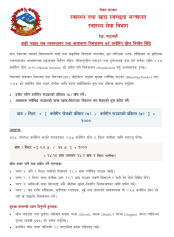
Method for preparing a chlorine solution for post-flood body management and environmental disinfection.
Read More
Feb 23
This document presents a structured Rapid Risk Assessment (RRA) conducted at the local level to evaluate public health threats, system readiness, and response capacity. It outlines the methodology used to identify hazards, assess exposure and vulnerability, and determine risk magnitude through qualitative and semi-quantitative scoring. The report analyzes local epidemiological patterns, health system resources, surveillance functionality, and community risk factors. Findings priority hazards, gaps in preparedness, and operational constraints affecting timely detection and response. The document concludes with targeted recommendations to strengthen local preparedness, enhance coordination mechanisms, improve data flow, and build response capacity for future outbreaks and emergencies.
Read More
Feb 23
This document describes a comprehensive alert and response framework designed to ensure early detection, timely notification, and rapid response to public health events. It defines surveillance structures, reporting pathways, verification procedures, and escalation thresholds across different administrative levels. The framework details roles and responsibilities of health authorities, rapid response teams, laboratories, and coordination bodies. It emphasizes standardized timelines, performance monitoring indicators, and decision-making protocols for outbreak management. The framework aims to improve system efficiency, reduce response delays, and strengthen integrated public health emergency management through clear operational guidance and accountability mechanisms.
Read More
Jan 28
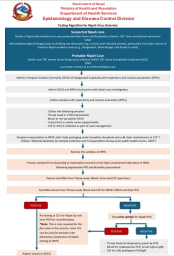
This is an Interim guideline for sample collection and testing Algorithm for Nipah Virus detection in Nepal.
Read More
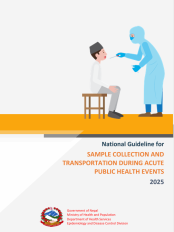
Sep 23
A well-coordinated and reliable system for the collection and transportation of clinical and environmental specimens are required for effective outbreak control. This manual outlines a structured national framework that connects the Epidemiology and Disease Control Division (EDCD), Provincial Health Directorates, Rapid Response Teams, and laboratories at all levels—public and private—under the technical leadership of the National Public Health Laboratory (NPHL). It provides clear guidance to ensure that specimens are collected, packaged, labeled, stored, and transported in a manner that preserves their integrity, maintains chain of custody, and adheres to established biosafety and biosecurity standards. This document defines referral pathways, coordination mechanisms, and roles within the broader alert, response, and surveillance systems. As a dynamic and complementary resource aligned with existing disease-specific and regulatory guidelines, this manual supports timely diagnosis, strengthens surveillance, and enhances evidence-based public health decision-making. Adherence to these standardized procedures is therefore essential to ensure the accuracy of laboratory results, safeguard health workers and communities, and enable prompt and effective public health actions.
Read More
Jan 2
द्रुत प्रतिकार्य टोली तथा आपत्कालीन चिकित्सकीय समूह परिचालन सम्बन्धी निर्देशिका, २०७९
Read More
Oct 13
SoP for Case Investigation and Contact Tracing of Monkeypox
Read More
Feb 6
Jan 14
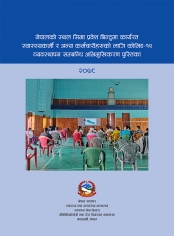
नेपालको स्थल सिमा प्रवेश बिन्दुमा कार्यरत स्वास्थ्यकर्मी र अन्य कर्मचारीहरुको लागि कोभिड–१९ व्यवस्थापन सम्बन्धि अभिमुखिकरण पुस्तिका
Read More
Dec 20
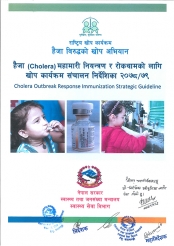
हैजा महामारी नियन्त्रण र रोकथामको लागि खोप कार्यक्रम संचालन निर्देशिका २०७८/७९
Read More

Jan 1
आकस्मिक बाढिको प्रतिकार्यका प्रमुख गतिविधिहरुको प्रतिवेदन
Read More
Jan 1
आकस्मिक बाढिको प्रतिकार्यका प्रमुख गतिविधिहरुको प्रतिवेदन
Read More
Jan 1
आकस्मिक बाढिको प्रतिकार्यका प्रमुख गतिविधिहरुको प्रतिवेदन
Read More