Dec 30
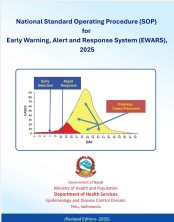
Preamble Pursuant to Section 49 of the Public Health Service Act, 2075 (2018), in cases where listed infectious diseases or unforeseen public health events occur, information shall be communicated to the concerned authority within the prescribed time frame. This obligation is to ensure the collection, reporting, analysis, communication, and response relating to infectious diseases and public health events, as well as to conduct continuous disease surveillance in accordance with the International Health Regulations, 2005 (IHR 2005), under which certain diseases must be reported immediately at the international level. Accordingly, in exercise of the authority conferred by Section 64 of the Act, the Ministry of Health and Population, Department of Health Services hereby updated the EWARS Standard Operating Procedure 2025.
Read More
Dec 29
प्रस्तावना: जनस्वास्थ्य सेवा ऐन २०७५ को दफा ४९ ले व्यवस्था गरे बमोजिम सूचीकृत गरिएका सङ्‍क्रामक रोग र जनस्वास्थ्य सम्बन्धी अनपेशित घटना देखिएमा सो को जानकारी सम्बन्धित निकायमा तोकिएको समयावधिभर सूचना सम्प्रेषण गरी सङ्‍क्रामक रोग तथा जनस्वास्थ्य घटनाको सूचना सङ्‍कलन, प्रतिवेदन, विश्लेषण, सञ्चार र प्रतिकार्य गर्न तथा अन्त्तराष्ट्रिय स्वास्थ्य नियमावली २००५ (International Health Regulations 2005) अनुरुप निरन्त्तर रुपमा रोग निगरानी गरी केही रोगहरुलाई तत्कालै अन्त्तराष्ट्रिय तहमा प्रतिवेदन गर्नुपर्ने दायित्व रहेकोले, ऐनको दफा ६४ ले दिएको अधिकार प्रयोग गरी स्वास्थ्य तथा जनसङ्‍ख्या मन्त्रालयले यो निर्देशिका जारी गरेको छ।
Read More
Sep 23
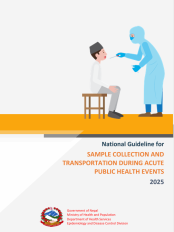
A well-coordinated and reliable system for the collection and transportation of clinical and environmental specimens are required for effective outbreak control. This manual outlines a structured national framework that connects the Epidemiology and Disease Control Division (EDCD), Provincial Health Directorates, Rapid Response Teams, and laboratories at all levels—public and private—under the technical leadership of the National Public Health Laboratory (NPHL). It provides clear guidance to ensure that specimens are collected, packaged, labeled, stored, and transported in a manner that preserves their integrity, maintains chain of custody, and adheres to established biosafety and biosecurity standards. This document defines referral pathways, coordination mechanisms, and roles within the broader alert, response, and surveillance systems. As a dynamic and complementary resource aligned with existing disease-specific and regulatory guidelines, this manual supports timely diagnosis, strengthens surveillance, and enhances evidence-based public health decision-making. Adherence to these standardized procedures is therefore essential to ensure the accuracy of laboratory results, safeguard health workers and communities, and enable prompt and effective public health actions.
Read More
Jul 21
Jul 21
Jul 21
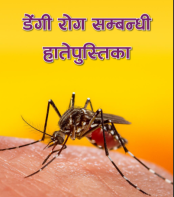
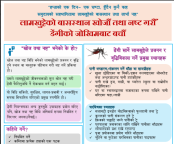
SEARCH AND DESTORY MOSQUITO HABITATS LEAFLET
Read More
Jul 21
Jul 16
Standard Operating Procedure for Mpox Surveillance-2024
Read More

Jul 10
Standards for establishing snakebite treatment centers, 2077
Read More
Jun 4

Jan 1
Flooding in the rural districts of Bagmati Province creates the classic postdisaster conditions for communicable disease transmission: contamination of drinking-water sources, destruction of latrines, displacement of populations into crowded temporary shelters, interruption of health services and cold chain, expansion of vector breeding habitat, and loss of livestock with associated zoonotic exposure. Floods do not import new pathogens; they amplify the pathogens already endemic in the area. Preparedness must therefore be built on what is known to circulate in Bagmati Province — including the enteric pathogens Vibrio cholerae O1, Salmonella Typhi and hepatitis A and E viruses, together with dengue virus, Orientia tsutsugamushi, Leptospira species, Japanese encephalitis virus, measles virus, and residual foci of malaria and visceral leishmaniasis. Two operational realities shape this plan. First, the interval between exposure and detectable clusters is short for enteric disease (2–14 days) and long for vector-borne and leptospiral disease (2–8 weeks), so surveillance intensity must be sustained well beyond the point at which media and political attention recede. Second, the routine surveillance system will be degraded exactly when it is most needed, because reporting health facilities may be damaged, staff displaced and connectivity lost. Apparent declines in reported cases in the first weeks after a flood are more often artefacts of reporting failure than evidence of control.
Read More
Jan 1
Acute Gastro Enteritis was the highest reported condition, accounting for 721 cases.
Read More
Jan 1
Acute Gastro Enteritis was the highest reported condition, accounting for 667 cases.
Read More